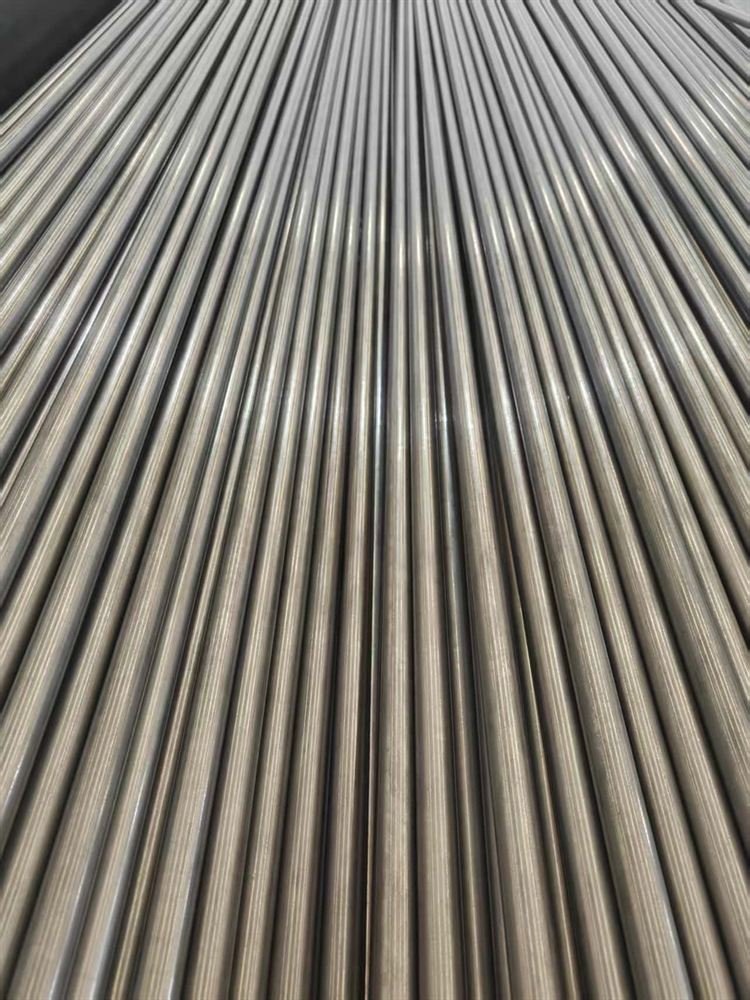
We supply welded and cold drawn low carbon steel tubing to SAE J525 for the same fluid line applications as SAE J524. The weld seam is drawn down so the tube can still be bent and flared, at a lower cost than seamless tube.
Price: quoted per specification. Steel prices move with the raw material market, so every quotation is confirmed at the time of order.
Specifications
- Standard: SAE J525 welded and cold drawn low carbon steel tubing
- Steel grade: Low carbon steel
- Size range: Small diameter, quoted to drawing
- Feature: Suitable for bending and flaring
SAE J525 against SAE J524
Both are automotive fluid line specifications for welded low carbon tube, and both are drawn after welding so the seam can be bent and flared. J525 is the softer, lower carbon version, used where the line is formed hard or where the customer wants the most formable tube the specification allows. If a drawing says J525, J524 is not an automatic substitute: the difference shows up in flare quality and in how the tube behaves at a tight bend radius.
What to specify in the order
| Item | What to write | Why it matters |
|---|---|---|
| Size | Outside diameter × wall, in inch or mm | Sets the fitting series and the burst margin |
| Grade | 1008 / 1010 low carbon | Carbon level controls how far the flare opens before it splits |
| Condition | As drawn, or annealed after drawing | Annealed bends tighter but costs more |
| Length and ends | Coil, or straight lengths with square cut | Coil suits automated benders, lengths suit manual lines |
| Tests | Pressure, bend, flare, flattening | Flare and bend are the two tests that predict field failure |
Bend and flare
The seam position matters. On a tight bend the weld should sit on the neutral axis, not on the outside of the radius, otherwise it opens. If your bender cannot control seam orientation, say so and we will discuss a seamless tube instead, because no amount of drawing removes the risk of a seam placed on the outside of a bend. State the bend radius and the flare angle on the order so the tube can be quoted against the tests it must pass.
Packing and export
Coils are strapped and wrapped, straight lengths are bundled and end-capped, and both are protected with a light anti-rust oil. Fluid line tube is thin walled, so bundles are kept small enough to avoid ovality in transit. Certificates state chemistry, tensile and the tests actually performed; if your customer needs the flattening and flare results on the certificate, ask for them at the quotation stage.
Typical applications
- Brake lines
- Fuel lines
- Low pressure fluid circuits
Standard reference: see our SAE J525 standard page for grades, delivery conditions and tolerances.
Quality and packing: tubes are protected with anti-rust oil and packed seaworthy, in wooden cases where agreed. Each lot is tested for chemical composition, yield and tensile strength, flattening, elongation and dimensions, with visual inspection and NDT available on request.
Request a quotation: send your size list or drawing through our contact page. We reply within one working day with price, tolerance and lead time.